
Abstract:
Radio frequency (RF) field simulation has long been a cornerstone of wireless system design. Precise characterization of RF propagation is critical for network planning, spectrum sharing, and for enabling accurate sensing tasks such as localization and imaging. While traditional physics-based ray tracing models offer interpretability and efficiency, they often fail to capture site-specific geometric and material complexities. Conversely, black-box machine learning models can capture complex interactions but often lack the interpretability and generalizability across diverse environments. In this talk, Zhang will present RF Digital Twin (RFDT) as a new paradigm for bridging this gap through differentiable RF ray tracing. Unlike conventional forward-only simulators, RFDT functions as a “differentiable world model” that embeds physics-based simulation directly into a closed optimization loop. By minimizing the discrepancy between simulated and measured RF signals, RFDT enables joint inference of scene geometry, material properties, and transceiver states, thereby unifying simulation, sensing, and system optimization within a common framework. Zhang will demonstrate the accuracy and versatility of RFDT through extensive testbed implementations and experimental validation across diverse real-world scenarios. In addition, Zhang will discuss the potential of using RFDT as a foundational differentiable module for optimizing next-generation wireless communication, sensing, as well as supporting machine-learning-driven RF system design.
Bio:
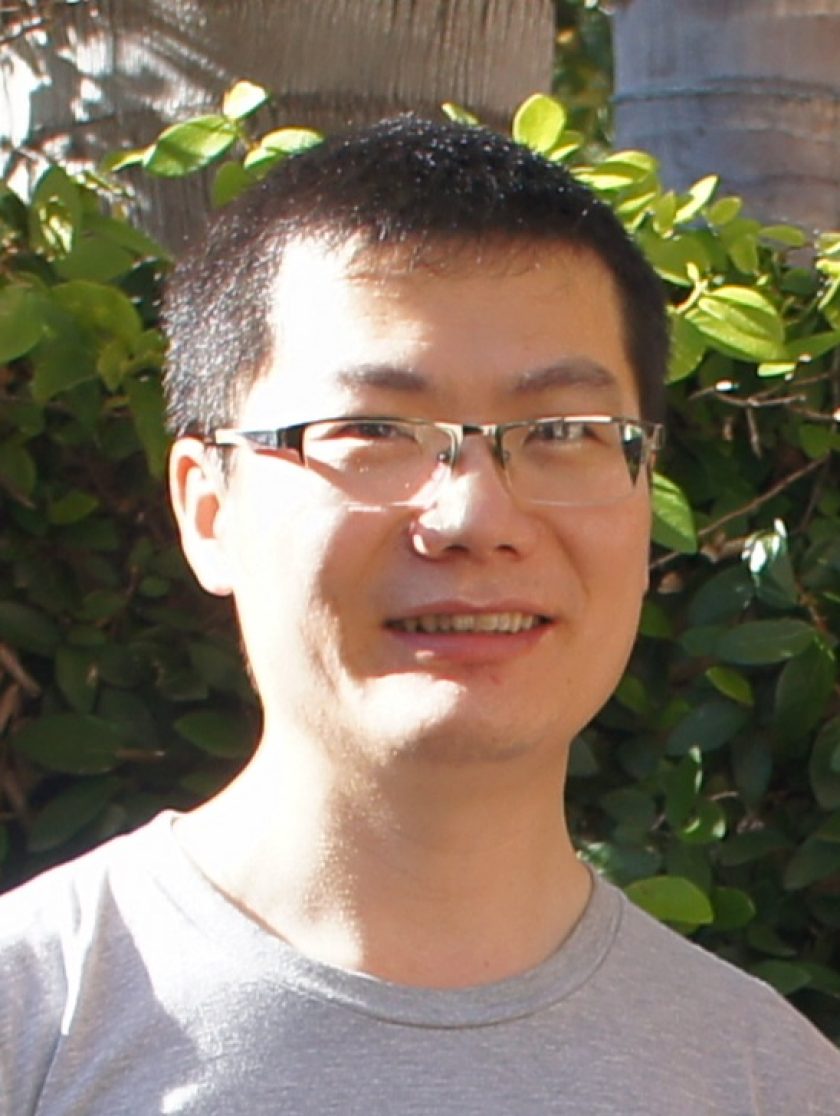
Xinyu Zhang is the Ericsson Endowed Chair Professor in the Department of ECE at UC San Diego, where he also serves as the director for the Center for Wireless Communications. He received his doctoral degree in computer science and engineering from the University of Michigan in 2012. His research interest lies in wireless communication networks and ubiquitous sensing systems. He is the recipient of two ACM MobiCom Best Paper Awards (2011 and 2020), ACM SenSys Best paper Award (2023), Communications of the ACM Research Highlight (2018, 2023), ACM SIGMOBILE Research Highlight (2018), NSF CAREER Award (2014), Google Research Award (2017, 2018, 2020), and ACM SIGMOBILE RockStar Award in 2023. He served as the TPC chair for ACM MobiCom 2019 and IEEE SECON 2017, co-chair of the NSF millimeter-wave research coordination network from 2016 to 2018, and associate editor for IEEE Transactions on Mobile Computing from 2017 to 2020.